Today’s Topics:
- Microsoft Defender False Positive Shows How Certificate Trust Incidents Can Create Operational Confusion
- Vercel Breach Shows How OAuth Abuse and Token Theft Can Turn SaaS Access Into an Internal Security Problem
- How can Netizen help?
Microsoft Defender False Positive Shows How Certificate Trust Incidents Can Create Operational Confusion
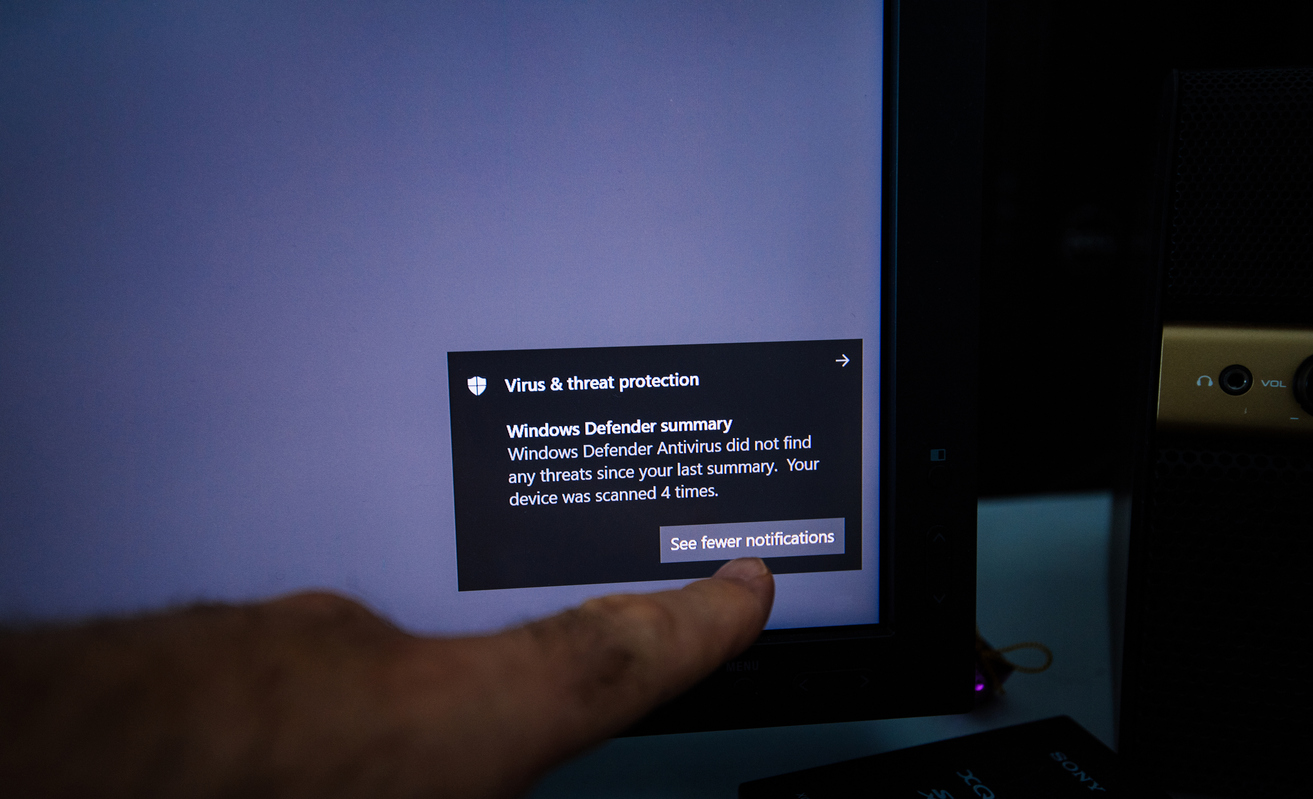
Microsoft Defender’s recent false positive involving DigiCert root certificates is a good example of how security tooling can create real operational concern even when the original alert is not tied to an active infection on the affected device. The issue began after a Microsoft Defender signature update flagged legitimate DigiCert root certificate entries as Trojan:Win32/Cerdigent.A!dha, which led to widespread alerts across Windows environments and, in some cases, the removal of certificates from the Windows trust store. For administrators, the immediate problem was not just the alert itself, but the uncertainty it created around whether systems were compromised, misconfigured, or simply affected by a bad detection update.
The certificates reportedly flagged by Defender were DigiCert root certificate entries stored under HKLM\SOFTWARE\Microsoft\SystemCertificates\AuthRoot\Certificates\. On impacted systems, these entries were removed from the AuthRoot store, which raised obvious concerns for users and IT teams that rely on the Windows trust store for certificate validation. Some users reportedly believed their systems had been infected and even reinstalled Windows out of caution, which shows how disruptive false positives can become when they involve trusted system components rather than a suspicious executable or downloaded file.
Microsoft later confirmed that the false positives were connected to detection logic added after reports of compromised certificates tied to a recent DigiCert security incident. The company stated that Defender had added detections to help protect customers, but later determined that false positive alerts were being triggered and updated the alert logic. Microsoft also said customers should update to Security Intelligence version 1.449.430.0 or later and that no extra action was needed for those alerts.
The larger context matters here. DigiCert recently disclosed a security incident where a threat actor targeted a customer support team member and gained access to initialization codes for a limited number of code signing certificates. DigiCert stated that a small number of those certificates were then used to sign malware, and the affected certificates were revoked within 24 hours of discovery. The attacker reportedly used a malicious ZIP file disguised as a screenshot to compromise support staff, then abused access to a support environment that allowed staff to view customer accounts from the customer’s perspective.
That access gave the attacker what they needed to obtain EV code signing certificates across a limited set of approved orders. DigiCert later said it revoked 60 code signing certificates, including 27 connected to a malware campaign referred to as Zhong Stealer. Security researchers had already reported that certificates issued to well-known companies were being abused to sign malware, giving those payloads a greater appearance of legitimacy. This is where the incident becomes more serious from a defender’s perspective: signed malware can bypass user suspicion, complicate triage, and force security teams to treat certificate reputation as part of their threat model rather than a background trust function.
Still, the Defender false positive appears to have flagged DigiCert root certificates in the Windows trust store, not the revoked DigiCert code signing certificates used in the malware campaign. That distinction is important. A compromised or abused code signing certificate is a serious issue, but a root certificate being flagged and removed by endpoint protection introduces a different kind of risk. It can affect trust validation, trigger unnecessary incident response activity, and create confusion across endpoints that may otherwise be healthy.
Vercel Breach Shows How OAuth Abuse and Token Theft Can Turn SaaS Access Into an Internal Security Problem

Vercel’s latest update on its Context.ai-linked breach shows how quickly a compromise in one SaaS environment can become a broader access problem for another organization. The company said it found another small group of customer accounts that showed signs of compromise after it widened its investigation to include more indicators, network request activity, and environment variable read events in its logs. Vercel also found some customer accounts with signs of older compromise that appeared to predate the incident, meaning some of the suspicious access may have come from separate social engineering, malware, or credential theft activity.
The breach originally stemmed from a compromise involving Context.ai, a third-party AI tool that had been used by a Vercel employee. Once the attacker gained control of the employee’s Google Workspace account, they were able to use that access to reach the employee’s Vercel account. From there, the attacker moved into a Vercel environment and enumerated internal systems, including the decryption of non-sensitive environment variables. The detail that stands out here is not just that an account was compromised, but that trust relationships between cloud services helped extend the attacker’s reach.
Hudson Rock’s investigation adds another layer to the incident. According to its findings, a Context.ai employee was infected with Lumma Stealer in February 2026 after searching for Roblox auto-farm scripts and game exploit executors. If that infection was the starting point, then this incident becomes a clear example of how consumer malware, stolen tokens, and SaaS integrations can intersect in enterprise environments. What begins as malware on one employee’s system can become a path into business platforms when session tokens, OAuth grants, API keys, or browser-stored credentials are exposed.
Vercel CEO Guillermo Rauch also stated that threat intelligence points to malware being distributed to computers in search of valuable tokens, including keys tied to Vercel accounts and other providers. That matters for defenders because token theft does not always look like a normal password-based compromise. An attacker may not need to trigger a login failure, bypass MFA in a traditional way, or perform obvious brute-force activity. If they can steal a valid session or abuse an approved integration, they may appear to be operating through legitimate access paths.
This is also why the Context.ai connection raises questions about shadow AI in enterprise environments. It is still unclear whether the Vercel employee’s use of the Context AI Office Suite was formally approved, but the risk is the same either way. AI tools that connect to Google Workspace, Slack, GitHub, development platforms, or other internal services can inherit sensitive permissions from the user. If those tools are compromised, poorly reviewed, or abandoned, they can become another route into business systems. Context.ai has since deprecated the AI Office Suite, but the issue goes beyond one tool.
OAuth integrations are useful because they make SaaS platforms easier to connect and use. That same convenience creates risk when permissions are overly broad, app review is weak, or users authorize tools outside formal security review. An attacker who compromises an approved app or steals tokens tied to that app may avoid some of the controls that would apply to a direct account takeover. For security teams, that means SaaS identity risk needs to include connected applications, OAuth grants, environment variables, API keys, and token activity, not just usernames and passwords.
The Vercel incident also shows why environment variable access deserves more attention. Vercel said the attacker decrypted non-sensitive environment variables, but defenders should still treat environment variable reads as meaningful security events. In many development environments, environment variables can contain service endpoints, feature flags, deployment details, internal references, or sometimes secrets that should have been stored elsewhere. Even when the exposed data is considered non-sensitive, it can help an attacker understand architecture, map services, and plan the next step.
For SOC teams, the operational lesson is that SaaS incidents need fast scoping. Teams should be able to answer which accounts were accessed, which OAuth apps were authorized, which environment variables were read, which tokens were created or used, and whether any unusual API activity occurred after the first compromise. Waiting until after containment to build that picture leaves too much room for an attacker to move through connected systems.
Organizations should also review how they approve and monitor AI-connected SaaS tools. That review should include OAuth scopes, data access, vendor security posture, logging availability, app ownership, deprecation status, and whether the tool is still actively maintained. If employees can connect third-party AI tools to business accounts without review, the organization may not have a reliable inventory of which applications can touch internal data.
How Can Netizen Help?
Founded in 2013, Netizen is an award-winning technology firm that develops and leverages cutting-edge solutions to create a more secure, integrated, and automated digital environment for government, defense, and commercial clients worldwide. Our innovative solutions transform complex cybersecurity and technology challenges into strategic advantages by delivering mission-critical capabilities that safeguard and optimize clients’ digital infrastructure. One example of this is our popular “CISO-as-a-Service” offering that enables organizations of any size to access executive level cybersecurity expertise at a fraction of the cost of hiring internally.
Netizen also operates a state-of-the-art 24x7x365 Security Operations Center (SOC) that delivers comprehensive cybersecurity monitoring solutions for defense, government, and commercial clients. Our service portfolio includes cybersecurity assessments and advisory, hosted SIEM and EDR/XDR solutions, software assurance, penetration testing, cybersecurity engineering, and compliance audit support. We specialize in serving organizations that operate within some of the world’s most highly sensitive and tightly regulated environments where unwavering security, strict compliance, technical excellence, and operational maturity are non-negotiable requirements. Our proven track record in these domains positions us as the premier trusted partner for organizations where technology reliability and security cannot be compromised.
Netizen holds ISO 27001, ISO 9001, ISO 20000-1, and CMMI Level III SVC registrations demonstrating the maturity of our operations. We are a proud Service-Disabled Veteran-Owned Small Business (SDVOSB) certified by U.S. Small Business Administration (SBA) that has been named multiple times to the Inc. 5000 and Vet 100 lists of the most successful and fastest-growing private companies in the nation. Netizen has also been named a national “Best Workplace” by Inc. Magazine, a multiple awardee of the U.S. Department of Labor HIRE Vets Platinum Medallion for veteran hiring and retention, the Lehigh Valley Business of the Year and Veteran-Owned Business of the Year, and the recipient of dozens of other awards and accolades for innovation, community support, working environment, and growth.
Looking for expert guidance to secure, automate, and streamline your IT infrastructure and operations? Start the conversation today.


Leave a Reply