Determining the ROI for any cybersecurity investment, from staff training to AI-enabled authentication managers, can best be described as an enigma shrouded in mystery. The digital threat landscape changes constantly, and it’s very difficult to know the probability of any given attack succeeding — or how big the potential losses might be. Even the known costs, such as penalties for data breaches in highly regulated industries like health care, are a small piece of the ROI calculation. In the absence of good data, decision makers must use something less than perfect to weigh the options: their judgment.
-

-
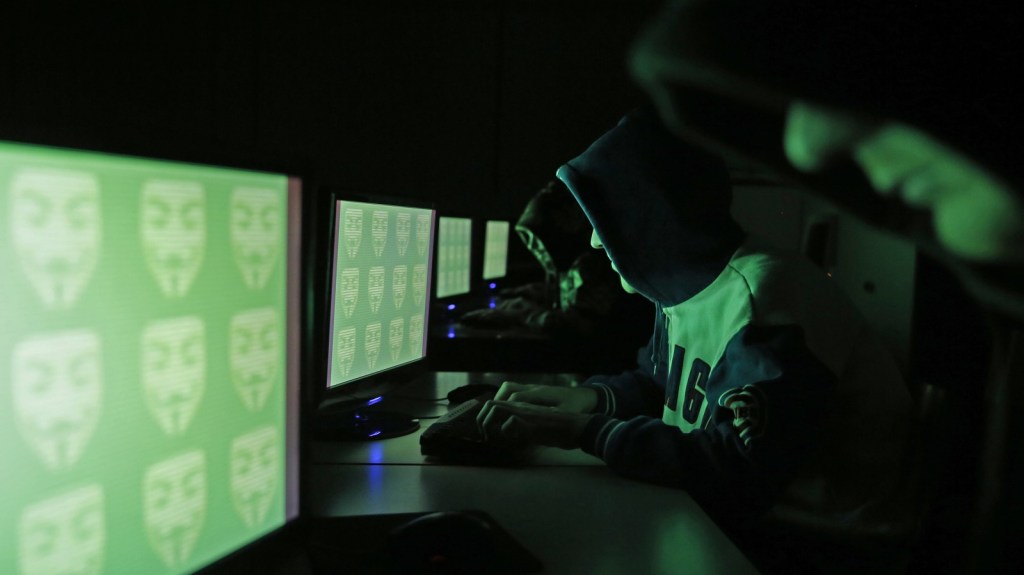
In what may come as one of the most (and yet least) surprising revelations on the US’ presidential election last year, it seems that an arm of the Russian military intelligence used spear-phishing campaigns and malware to attempt to manipulate parts of the American electoral system. There’s no evidence that the attack directly influenced the outcome.
-
The breach that was the fly in the ointment of the Yahoo-Verizon deal is one of many now surfacing as security of acquired firms starts to become a point of negotiation.
The mergers and acquisitions (M&A) market for software broke a lot of records last year, as investors took advantage of the convergence of cheap money and of society’s growing dependence on software in every facet of personal and business life. But as the feeding frenzy continues, there’s one big sticking point that rears its head more frequently than any other deal blocker in the software M&A game: cybersecurity.
-

Because the Internet of Things is an unnatural disaster.
Cybersecurity insurance has been gaining prominence over the past couple years across a variety of sectors. Now it’s poised to be the next big thing for consumers.
For a barometer, look no further than American International Group Inc.’s newest consumer product called Family CyberEdge. According to AIG executives who spoke to press, it “offers coverage for expenses that arise from online bullying, extortion and other digital misdeeds.” They said Family CyberEdge would include “public relations and legal services, as well as at-home assessments of family electronic devices.”
-

My wife and I just finished binge-watching the second season of “Mr. Robot,” the hit cable drama about a hacker with issues. We loved the writing, acting and sinewy, layered plot line that embraces most of the dark side of our cyber age.
As you can imagine, getting hooked on Mr. Robot hasn’t made us any less vigilant about our online data. I’ve been hacked several times and the victim of identity and IRS tax form theft three times. It’s not a pleasant experience.
-

The global cybersecurity sector is facing a major shortfall of workers, according to research by International Information System Security Certification Consortium (ISC)², a non-profit organization which specializes in information security education and certifications.
(ISC)² said that by 2022 there will be 1.8 million vacancies in the industry that will need to be filled. The General Data Protection Regulation law (GDPR) is trying to force European organizations to expand their cyber workforce, causing demand to outstrip the supply of expertise.
-

After nearly 20 years of trying and billions of dollars in investment, why are organizations are still struggling with cybersecurity? In fact, the problem seems to be getting worse, not better. Answering this question requires moving beyond a purely technical examination of cybersecurity. It’s true that the technical challenges are very real; we don’t know how to write bug-free code, for example. But if you look at the challenge more broadly, even if we resolved the technical issues, cybersecurity would remain a hard problem for three reasons:
-It’s not just a technical problem
-The rules of cyberspace are different from the physical world’s
-Cybersecurity law, policy, and practice are not yet fully developed -

State and local governments can play a critical role.
You probably heard all about the devastating ransomware attack WannaCry. Starting May 12, it ripped through the globe, infecting more than 300,000 computers worldwide.
What you probably didn’t hear was that the first reported appearance of the worm in the U.S. was on government computers in Cook County, Illinois.
-
Every business owner should be aware of the substantial issues caused by the latest malware attack which has played out over the past month or so.
This attack exploited a newly leaked toolkit from the National Security Agency. “WannaCry,” as it is called, took advantage of a well-known vulnerability – one that had a patch released in March called MS17-010.
While taking advantage of a known vulnerability is nothing new, this time it was packaged with more traditional ransomware software. Ransomware is a virus that encrypts the contents of a computer and attached storage and requires a ransom to be paid by the system owner in order to decrypt and get back your files.
It was this combination of ploys which resulted in one of the most widely and quickly distributed attacks in recent history.
Here’s what most business owners don’t know or realize – this type of attack is easily prevented by putting in place sound cybersecurity practices. It’s called foundational cybersecurity – essentially getting back to basics.
To demonstrate, compare the preparation and response to this global attack by two fictitious businesses: Business A and Business B.
-

Cybersecurity Ventures has reviewed and synthesized dozens of employment figures from the media, analyst, job boards, vendors, governments, and organizations globally, towards predicting the number of cybersecurity job openings ove the next 5 years.
The cybersecurity job forecasts have been unable to keep pace with the dramatic rise in cybercrime, which is predicted to cost the world $6 trillion annually by 2021, up from $3 trillion in 2015.

