Netizen Blog and News
The Netizen team sharing expertise, insights and useful information in cybersecurity, compliance, and software assurance.
Category: Threat Intelligence
-

Researchers at Trail of Bits have discovered an attack exploiting image downscaling artifacts for hidden prompt injections in large language models. This technique allows attackers to embed malicious instructions in images, leading to unauthorized access and data breaches. The attack affects numerous AI systems and requires user consent, posing significant security risks.
-

Microsoft’s August 2025 Patch Tuesday addresses 107 vulnerabilities, including a critical zero-day in Windows Kerberos, which allows privilege escalation. Organizations should prioritize patching and limiting access to sensitive attributes. Major vendors like Adobe, Cisco, and Fortinet also released important updates.
-

Threat actors are increasingly weaponizing AI for ransomware attacks, utilizing tools like Claude Code for reconnaissance and extortion. The recent CVE-2025-42957 vulnerability in SAP S/4HANA allows minimal-access users to exploit the system, leading to severe data breaches. Netizen offers solutions for enhanced cybersecurity and operational support for vulnerable clients.
-

Security vulnerabilities pose significant threats to organizational security. Netizen’s SOC identified five critical vulnerabilities requiring immediate attention. Notably, CVE-2025-7775 affects NetScaler ADC, allowing remote code execution; CVE-2025-53771 enables spoofing in SharePoint; CVE-2025-54948 allows command injection in Trend Micro Apex One, and CVE-2025-8088 involves serious exploitation in WinRAR. CVE-2025-21479 targets Qualcomm GPUs, emphasizing the need for…
-

Iranian hackers have maintained prolonged access to Middle East critical infrastructure through VPN exploits and malware, leveraging vulnerabilities in popular VPNs. Recent vulnerabilities in Citrix and SAP GUI have exposed sensitive data, prompting calls for immediate updates and mitigation strategies. Organizations must adopt robust cybersecurity measures for protection against these threats.
-
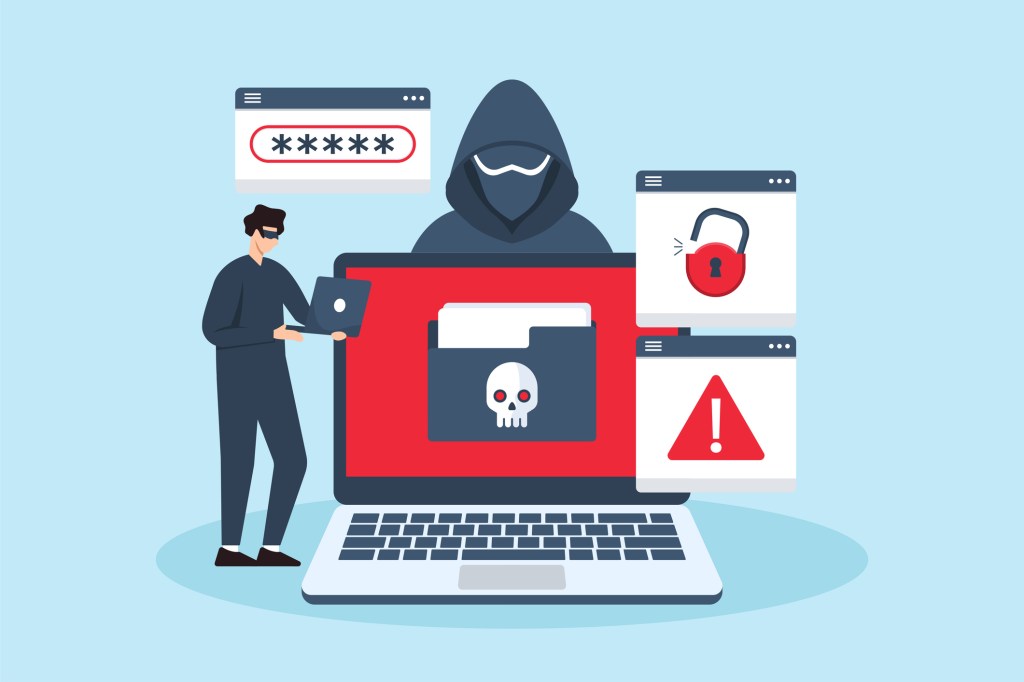
Ransomware attacks increasingly target small and mid-sized businesses (SMBs) due to their limited cybersecurity resources and outdated systems. Attackers find vulnerabilities in various entry points, leading to data breaches and ransom payments. Effective defense strategies include endpoint detection, strong access controls, prioritized patching, secured backups, and employee training, supported by specialized cybersecurity solutions like those…
-

Docker has patched a critical container escape vulnerability (CVE-2025-9074) in Docker Desktop, allowing an attacker to break out of container isolation. Meanwhile, a new Linux malware technique uses RAR filenames to deploy the VShell backdoor, exploiting filename parsing for stealth. Organizations are urged to enhance security measures and update software immediately.
-

Noah Michael Urban, a 20-year-old from Florida, was sentenced to ten years in federal prison for his role in the cybercrime group Scattered Spider, which engaged in SIM-swapping and phishing schemes, stealing over $800,000. He was ordered to pay $13 million in restitution to victims, highlighting a growing threat from similar groups.
-

SafeBreach researchers revealed a new attack method, “Win-DDoS,” that exploits Windows Domain Controllers for large-scale DDoS attacks without malware. Concurrently, cybercriminals increasingly target smart contracts, capturing over $14 billion since 2020 through vulnerabilities. To counteract these threats, expert recommendations include auditing contracts and maintaining comprehensive cybersecurity measures.
-

Human Digital Twins (HDTs) enhance cybersecurity by monitoring user behavior to detect anomalies and insider threats, moving beyond traditional identity management. They continually analyze user actions post-login, enabling real-time alerts for compromised accounts. Integrated within Zero Trust frameworks, HDTs provide adaptive access control while addressing privacy concerns through strict data governance and compliance measures.
 Netizen Blog and News