Category: Security
-

Preparing for CMMC compliance involves small and mid-sized businesses defining and documenting their Controlled Unclassified Information (CUI) boundaries comprehensively. This includes mapping data flow and assets, involving cloud and managed service providers, ensuring compliance, implementing protections, and maintaining thorough documentation. A clear scope is essential for successful audits and defense contract eligibility.
-

The Cybersecurity Maturity Model Certification (CMMC) is essential for Defense Industrial Base contractors, evolving from self-attestation to third-party assessments. Streamlined to three levels in CMMC 2.0, it enforces compliance across contracts. Netizen offers pre-assessments to help organizations prepare, ensuring they meet requirements and remain eligible for defense contracts.
-

Researchers at Trail of Bits have discovered an attack exploiting image downscaling artifacts for hidden prompt injections in large language models. This technique allows attackers to embed malicious instructions in images, leading to unauthorized access and data breaches. The attack affects numerous AI systems and requires user consent, posing significant security risks.
-

Threat actors are increasingly weaponizing AI for ransomware attacks, utilizing tools like Claude Code for reconnaissance and extortion. The recent CVE-2025-42957 vulnerability in SAP S/4HANA allows minimal-access users to exploit the system, leading to severe data breaches. Netizen offers solutions for enhanced cybersecurity and operational support for vulnerable clients.
-

Security vulnerabilities pose significant threats to organizational security. Netizen’s SOC identified five critical vulnerabilities requiring immediate attention. Notably, CVE-2025-7775 affects NetScaler ADC, allowing remote code execution; CVE-2025-53771 enables spoofing in SharePoint; CVE-2025-54948 allows command injection in Trend Micro Apex One, and CVE-2025-8088 involves serious exploitation in WinRAR. CVE-2025-21479 targets Qualcomm GPUs, emphasizing the need for…
-

Iranian hackers have maintained prolonged access to Middle East critical infrastructure through VPN exploits and malware, leveraging vulnerabilities in popular VPNs. Recent vulnerabilities in Citrix and SAP GUI have exposed sensitive data, prompting calls for immediate updates and mitigation strategies. Organizations must adopt robust cybersecurity measures for protection against these threats.
-

Docker has patched a critical container escape vulnerability (CVE-2025-9074) in Docker Desktop, allowing an attacker to break out of container isolation. Meanwhile, a new Linux malware technique uses RAR filenames to deploy the VShell backdoor, exploiting filename parsing for stealth. Organizations are urged to enhance security measures and update software immediately.
-

Organizations face significant security challenges as human behavior plays a crucial role in breaches, often exceeding technology failures. A positive security culture, shaped by leadership, policy simplicity, supportive teams, and engaging training, is vital. Netizen provides advanced cybersecurity solutions and has established itself as a trusted partner for secure digital environments.
-

Noah Michael Urban, a 20-year-old from Florida, was sentenced to ten years in federal prison for his role in the cybercrime group Scattered Spider, which engaged in SIM-swapping and phishing schemes, stealing over $800,000. He was ordered to pay $13 million in restitution to victims, highlighting a growing threat from similar groups.
-
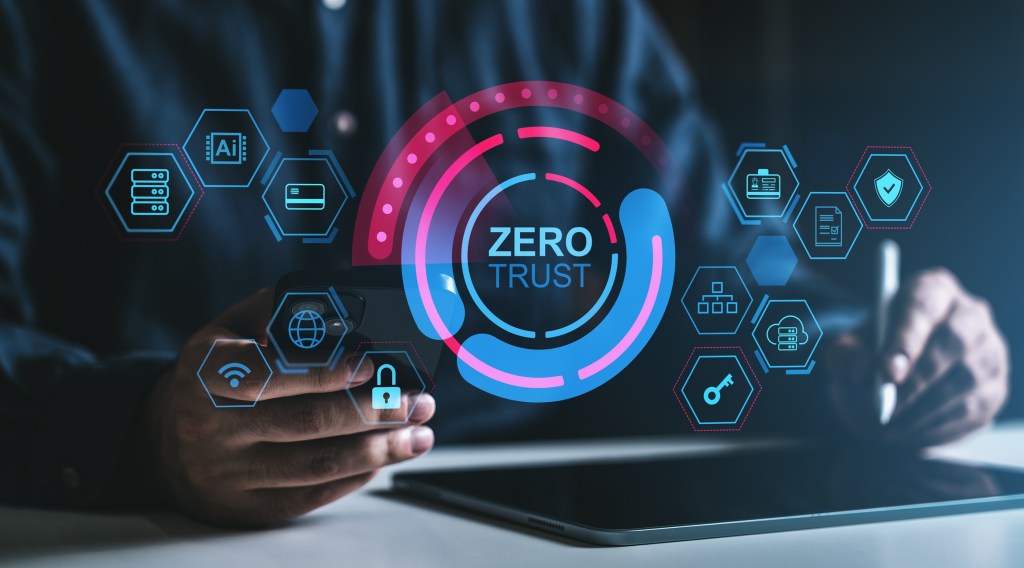
Zero Trust Network Access (ZTNA) is crucial for contemporary organizations, offering continuous verification and identity-centric access control to enhance security amid evolving cyber threats. Unlike traditional models, ZTNA minimizes lateral movement, reduces attack surfaces, and simplifies remote access. Integrating with SASE, ZTNA ensures only authorized users can access applications, fostering a secure environment.

