Category: CyberSecurity
-

The modern browser has become one of the most valuable data repositories in the enterprise. It stores passwords, cookies, active sessions, autofill fields, saved payment details, authentication tokens, browsing history, device identifiers, and traces of nearly every cloud platform a user touches during the workday. For attackers, that makes the browser less like a utility…
-
Software supply chain security has spent the last several years focused on source code, third-party packages, vulnerable libraries, and malicious dependencies. That focus made sense. Incidents like Log4Shell, dependency confusion, typosquatting, and compromised open-source packages made it clear that organizations needed better visibility into what their applications were built from. That visibility still matters. SBOMs,…
-

Today’s Topics: INTERPOL Warns Cybercrime Is Surging Across Asia-Pacific as Phishing, Ransomware, and AI Scams Scale Up The Gentlemen Ransomware Shows How Former Affiliates Are Building Faster, Leaner RaaS Operations How can Netizen help? INTERPOL Warns Cybercrime Is Surging Across Asia-Pacific as Phishing, Ransomware, and AI Scams Scale Up Cybercrime is rising sharply across Asia…
-

Secure code review has always required more than finding obvious injection bugs or checking whether a developer used the right library call. Good review connects code behavior to trust boundaries, data flow, authorization logic, state changes, error handling, deployment context, and abuse cases. AI does not remove that requirement. It changes the volume, speed, source,…
-

Service accounts sit at the intersection of identity, application runtime, infrastructure automation, and privileged access. They run Windows services, connect middleware to databases, let pipelines deploy code, let SaaS applications read tenant data, and allow workloads in cloud and Kubernetes environments to call APIs without a person at the keyboard. That operational value also makes…
-

For many organizations, SOC 2 begins as a customer request. A prospect asks for the report, a contract requires it, or a sales cycle stalls until the organization can prove that it has controls in place to protect customer data. That pressure often turns SOC 2 into a project with a deadline, an audit window,…
-
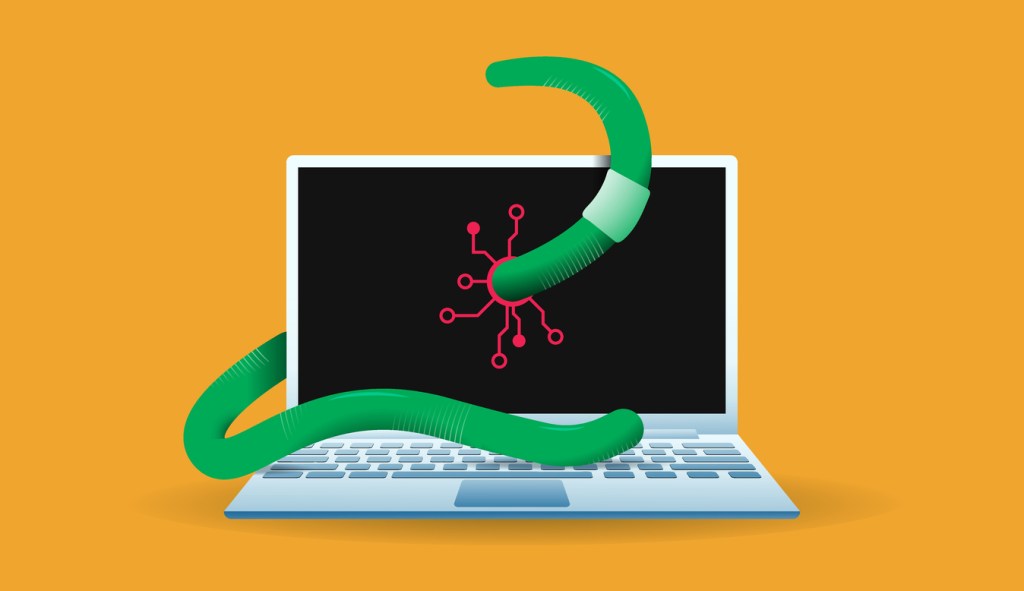
Today’s Topics: Self-Replicating AI Worm Shows Malware Can Reason Its Way Through a Network U.S. Order Pulling Anthropic’s Fable 5 and Mythos 5 Turns AI Cyber Capability Into a National Security Fight How can Netizen help? Self-Replicating AI Worm Shows Malware Can Reason Its Way Through a Network University of Toronto researchers have demonstrated a…
-

Living-off-the-land attacks have become one of the clearest examples of a security problem that cannot be solved by malware detection alone. Instead of bringing obvious malicious tooling into an environment, attackers use what is already present: signed Windows binaries, administrative consoles, scripting engines, remote management services, cloud command-line tools, backup utilities, identity platforms, and trusted…
-

Today’s Topics: LLM Agent Used in Post-Exploitation Attack After Marimo Vulnerability Exploit Internet-Exposed Tank Gauges Become a Cyber Risk for U.S. Fuel and Industrial Sites How can Netizen help? LLM Agent Used in Post-Exploitation Attack After Marimo Vulnerability Exploit A threat actor was observed using a large language model agent to conduct post-exploitation activity after…
-
Vulnerability management has always been a race between disclosure, exploitation, prioritization, testing, and remediation. AI is compressing that race. The issue is not simply that attackers have better tools. It is that the entire vulnerability lifecycle is moving faster than the operational processes most organizations use to manage risk. For years, vulnerability management programs were…

