
Today’s Topics:
- Compromised IP Cameras Have Become an Intelligence Collection Layer
- OT Attacks Are Down, But the Risk Profile Has Not Improved
- How can Netizen help?
Compromised IP Cameras Have Become an Intelligence Collection Layer

Internet-connected cameras have historically been treated as low-priority security concerns. They were associated with botnet activity, unauthorized viewing, or basic demonstrations of weak authentication controls. That characterization no longer reflects how these devices are being used. Recent conflict activity shows a clear transition from opportunistic abuse into structured intelligence collection, where compromised camera infrastructure is used to observe, track, and validate physical activity inside targeted environments.
Reporting indicates that multiple nation-state actors are actively leveraging IP cameras to support operational objectives. In practice, this has included accessing traffic camera networks to monitor movement patterns, identify high-value individuals, and assess the impact of military actions. The key change is not just the presence of exploitation, but the intent behind it. These devices are no longer incidental entry points. They are being treated as persistent observation platforms that provide direct visibility into environments that would otherwise require physical access.
This shift also introduces a different targeting model. Traditional assumptions around nation-state activity often center on deliberate targeting of specific organizations or sectors. That model still exists, but it is now supplemented by broad, opportunistic scanning tied to geographic relevance. Actors are identifying exposed devices across entire regions rather than focusing exclusively on preselected entities. Any organization with externally accessible infrastructure within a region of interest can be collected into that exposure set. This increases the likelihood that organizations with no direct strategic value become part of an intelligence collection surface simply due to network visibility.
The underlying technical weaknesses enabling this access remain consistent and, in many cases, predictable. A large portion of exposed cameras fall into one of three categories: legacy deployments that have not been updated, shadow IT assets that were deployed outside formal oversight, or consumer-grade systems operating without centralized management. These devices frequently retain default credentials, run outdated firmware, or expose management interfaces directly to the internet. In many environments, they are deployed once and then effectively forgotten, which creates long-term exposure with minimal detection capability.
There is also a meaningful distinction between enterprise-managed and self-managed deployments. Large organizations tend to place camera infrastructure behind private networks, reducing direct exposure. That said, exceptions are common. Remote access configurations, temporary firewall rule changes, or misconfigured NAT policies can expose systems unintentionally. Public-facing camera systems, including traffic cameras and certain municipal deployments, introduce additional complexity by design. These systems are intended to be accessible, which expands the attack surface and creates opportunities for unauthorized access if protections are not consistently enforced.
From an operational standpoint, compromise is only the initial phase. Once an exposed device is identified, an adversary typically needs to analyze its placement, coverage area, and potential intelligence value before it becomes useful. This introduces a delay between access and exploitation that can be leveraged defensively. Organizations that maintain accurate asset inventories and monitor for anomalous behavior have an opportunity to detect unauthorized access during this analysis phase. In environments without that visibility, the transition from compromise to operational use can occur without any observable indicators.
The implications for defensive strategy are direct. Exposure management becomes the primary control point. Organizations need continuous visibility into what assets are externally accessible, including devices that fall outside traditional IT inventories. This requires active scanning of owned IP space, validation of externally reachable services, and routine verification that devices are not unintentionally exposed. Credential management remains a foundational control, particularly for embedded systems that are often deployed with default authentication settings.
Segmentation plays a critical role in limiting impact. Internet-facing IoT devices should be isolated from core business systems, with strict controls governing any communication paths. If a camera is compromised, it should not provide a viable pivot point into sensitive environments. Network design decisions determine whether a single exposed device becomes a contained issue or an entry point for broader compromise.
From a monitoring perspective, these systems need to be treated as active endpoints rather than passive infrastructure. This includes collecting logs where available, monitoring authentication attempts, and analyzing network traffic patterns associated with embedded devices. Outbound connections from cameras, particularly to unfamiliar external destinations, should be treated as high-signal events. Without this level of visibility, organizations lack the ability to identify when these devices are being accessed or repurposed.
OT Attacks Are Down, But the Risk Profile Has Not Improved
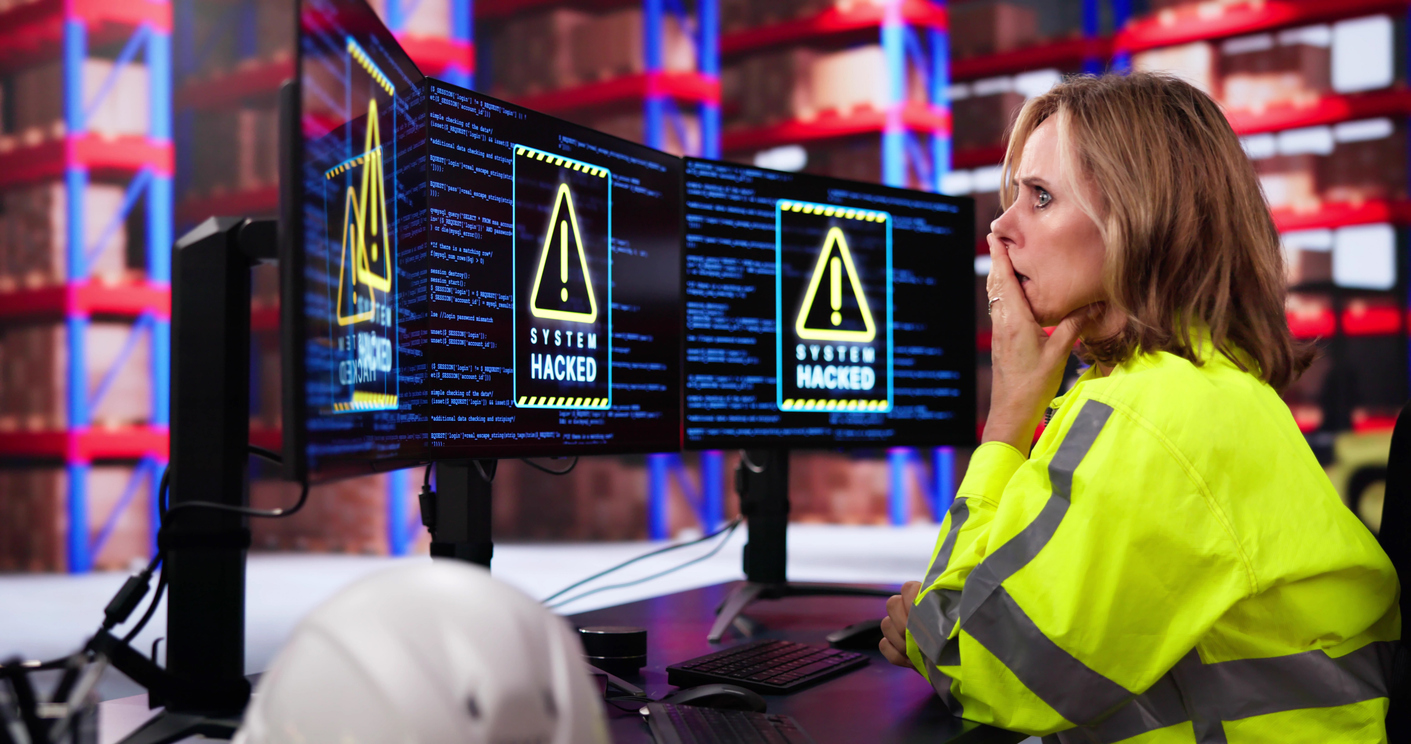
For the first time in years, the number of operational technology incidents resulting in physical consequences declined. That data point stands out immediately, given that OT-related threats have historically followed a consistent upward trajectory. After years of steady increases, including a peak of dozens of impactful incidents annually, 2025 recorded a measurable drop in these types of attacks.
At face value, this appears to signal progress. In practice, the underlying conditions do not support that conclusion. The reduction in volume is not clearly tied to a meaningful improvement in defensive posture across industrial environments. In many of the incidents that did occur, the root cause remained basic exposure issues. Human-machine interfaces and other critical control components were still being discovered through public scanning tools and accessed using default or previously compromised credentials. These are not advanced exploitation scenarios. They are preventable conditions that continue to persist in production environments.
There are several competing explanations for the decline, each with different implications. One possibility is that defensive controls are improving, though available evidence does not strongly support this. Another is that fewer incidents are being disclosed publicly. This is a more credible factor, particularly given how breach reporting works across different jurisdictions. While regulatory pressure has increased disclosure requirements in some regions, many critical infrastructure environments operate under reporting frameworks that do not translate into public visibility. In some cases, incident details are anonymized or aggregated before release, limiting the ability to assess trends accurately.
A more compelling explanation is tied to the ransomware ecosystem. Ransomware activity has been a primary driver behind many OT incidents over the past several years. Disruptions to major ransomware groups through law enforcement actions altered that landscape, at least temporarily. This reduced activity likely contributed to the overall drop in incidents with physical consequences. The issue is that this condition does not represent a structural change. Ransomware operations have already shown signs of stabilization, with new actors and tooling filling the gaps left by earlier disruptions. If that trend continues, the decline observed in 2025 is unlikely to persist.
There is also a visibility problem that complicates any assessment of progress. Legal and financial risk associated with breach disclosure has led organizations to limit the level of detail they release publicly. Companies face potential liability when early incident reports are later revised, which creates an incentive to disclose only what is strictly required. As a result, the public dataset used to analyze OT incidents is becoming less complete. This makes it more difficult to determine whether the observed decline reflects an actual reduction in activity or simply reduced transparency.
Even more important than the drop in volume is the nature of the attacks that continue to succeed. The technical sophistication of many incidents in 2025 was relatively low. There was limited evidence of new OT-specific malware or advanced protocol-level exploitation. Compared to prior years, where novel malware targeting programmable logic controllers and industrial protocols was identified, the threat activity observed was less complex from a development standpoint.
That reduction in technical complexity did not translate into reduced impact. Several incidents resulted in significant financial and operational consequences. In one case, an attack against a major automotive manufacturer generated losses in the billions when accounting for both direct and downstream economic effects. This reinforces a consistent pattern within OT environments: high impact does not require high sophistication. Exposure, weak authentication, and lack of segmentation are sufficient to produce severe outcomes.
At the same time, activity that does not result in immediate physical consequences is increasing. Nation-state and hacktivist operations targeting critical infrastructure expanded, even as the number of physically disruptive incidents declined. These operations often focus on gaining access, establishing persistence, or degrading systems without triggering immediate, observable effects. From a strategic standpoint, this type of access can be more valuable over time, particularly in scenarios where disruption is deferred or coordinated with other activities.
From a defensive perspective, the primary issue remains unchanged. Industrial environments continue to expose critical systems in ways that are not aligned with their risk profile. Internet-accessible control interfaces, insufficient network segmentation, and weak credential management create conditions where relatively unsophisticated actors can achieve meaningful outcomes. The absence of advanced malware in many of these incidents highlights that adversaries do not need complex tooling when basic access controls fail.
Monitoring and visibility within OT environments also remain limited in many organizations. Traditional IT-focused detection strategies do not always extend into industrial networks, leaving gaps in telemetry and response capability. Without consistent visibility into control systems, authentication events, and network communications, organizations are unlikely to detect unauthorized access before it results in operational impact.
The reduction in incident volume should not be interpreted as a reduction in risk. The factors contributing to the decline are unstable, and the conditions that enable successful attacks remain widely present. The severity of successful incidents, combined with increased activity that does not immediately manifest as disruption, indicates that the threat environment has not improved in any meaningful way. The exposure is still there, the barriers to entry remain low, and the potential impact continues to be significant.
How Can Netizen Help?
Founded in 2013, Netizen is an award-winning technology firm that develops and leverages cutting-edge solutions to create a more secure, integrated, and automated digital environment for government, defense, and commercial clients worldwide. Our innovative solutions transform complex cybersecurity and technology challenges into strategic advantages by delivering mission-critical capabilities that safeguard and optimize clients’ digital infrastructure. One example of this is our popular “CISO-as-a-Service” offering that enables organizations of any size to access executive level cybersecurity expertise at a fraction of the cost of hiring internally.
Netizen also operates a state-of-the-art 24x7x365 Security Operations Center (SOC) that delivers comprehensive cybersecurity monitoring solutions for defense, government, and commercial clients. Our service portfolio includes cybersecurity assessments and advisory, hosted SIEM and EDR/XDR solutions, software assurance, penetration testing, cybersecurity engineering, and compliance audit support. We specialize in serving organizations that operate within some of the world’s most highly sensitive and tightly regulated environments where unwavering security, strict compliance, technical excellence, and operational maturity are non-negotiable requirements. Our proven track record in these domains positions us as the premier trusted partner for organizations where technology reliability and security cannot be compromised.
Netizen holds ISO 27001, ISO 9001, ISO 20000-1, and CMMI Level III SVC registrations demonstrating the maturity of our operations. We are a proud Service-Disabled Veteran-Owned Small Business (SDVOSB) certified by U.S. Small Business Administration (SBA) that has been named multiple times to the Inc. 5000 and Vet 100 lists of the most successful and fastest-growing private companies in the nation. Netizen has also been named a national “Best Workplace” by Inc. Magazine, a multiple awardee of the U.S. Department of Labor HIRE Vets Platinum Medallion for veteran hiring and retention, the Lehigh Valley Business of the Year and Veteran-Owned Business of the Year, and the recipient of dozens of other awards and accolades for innovation, community support, working environment, and growth.
Looking for expert guidance to secure, automate, and streamline your IT infrastructure and operations? Start the conversation today.

 Netizen Blog and News
Leave a comment